
Next Interior Memos weekly digest, 31 July 2025
DOGE is departing, science and renewables are under attack, a leader for parks and wildlife without any relevant experience, and more.

What happened
First, the top three items this week:
- DOGE is gone from Interior. We think. There were rumors last Thursday, by Friday, the Times ran a story that Tyler Hassen would be departing Interior imminently and was confirmed by GovExec reporting. Hassen, along with Stephanie Holmes and Katrine Trampe, were the three DOGErs focused on destroying Interior, terrorizing its public servants (see below for the relevance to Reductions In Force [RIFs]), and violating privacy laws and policy. Hassen was leading and part-and-parcel of widespread harms, including as GovExec notes, this incident:
During their tenure, Holmes and Trampe had pushed for, and eventually got, high-level access to a personnel and payroll system run out of Interior as one of a few centralized systems the government uses to pay federal employees. Several high-ranking tech, cybersecurity and legal leaders at the department were placed on administrative leave and under investigation at the time, after they raised concerns about giving that level of access to DOGE.
This is surely good news from Interior, but it can’t be the end of the sordid chapter. A theme to which we will regularly return (and explore in more depth) is the need for accountability for these peoples’ actions and the damage they caused. Without accountability, we remain at very high risk of seeing repeats in years—maybe decades—to come. Elections are a form of accountability, but that is not sufficient given the specific details of illegal actions that were taken. There is some recognition in Congress of this need, but the full gamut of what accountability will mean remains to be determined. (Of course, this goes way beyond just Interior.)
- Destroying the institution of science. This week’s news of the EPA’s proposal to rescind the “endangerment finding” that underpins the agency’s climate regulations received much (much-needed) attention this week. While the focus is on a different agency, the change would have big implications for Interior given the Department’s role in energy policy for the country. Of course, the move is completely bogus; it is based on so much bad faith and willful misrepresentation of science it’s a little hard to comprehend. (For those keeping track at home, one critical reason we’re advised to defend institutions like science is because they help stop the advance of authoritarianism.)
- Consider how the Department of Energy released a “report” concurrent with EPA’s announcement that erroneously claims climate change isn’t really that costly. But we know this playbook—think of the MAHA report and its errors—so journalists started looking at the research being cited in DOE’s report. You will not be surprised at all that they found the DOE’s climate-denying authors dramatically misrepresented or cherry-picked the research.
- It’s also interesting that the administration is using the argument that carbon emissions "do not have a sufficiently close connection to the adverse impacts” of climate change for EPA to regulate. For some, that argument might sound familiar because it’s (one of) the same line of reasoning used in the first Trump administration to weaken the Endangered Species Act. In particular, there were regulatory changes to how the phrase “foreseeable future” is interpreted and how the consultation process of section 7 is carried out that both depended on the “Big Tobacco defense” of sowing doubt and casting uncertainty as a reason not to act.
- How do we stop this kind of destruction of science? By being engaged. For example, it sure looks like the proposal to choke off NIH grant funding by the Director of the Office of Management and Budget, Russ Vought, met the stiff winds of just how unpopular that is and got rolled back…NIH research grant funding will proceed! This is the same thing that happened with the proposed public lands sales from the reconciliation bill: being engaged matters.
- Not very well informed on energy? Or something else? Secretary Burgum and the administration love calling wind and solar unreliable; they think the observation that the wind doesn’t always blow and that the sun doesn’t always shine is some great insight or revelation. It isn’t. It is, however, a strong signal that either (a) they are very poorly informed—how is it they’re the last people to hear of grid storage and its advances?—or (b) they are being disingenuous with the country. Consider just a few of the ill-informed or disingenuous energy actions this past week:
- On Wednesday, the Bureau of Ocean Energy Management decided to rescind the designation of 3.5 million acres of Wind Energy Areas on the US’s Outer Continental Shelf. If you guess the arguments for this action are bogus…you are correct, take a look.
- With the Department’s press release this week they also seemed to be new-found advocates for birds in the face of wind power—even with their long history of fighting bird protections. We should not trust that this is genuine care for our feathered friends.
- Despite press releases saying they care about energy in Indian Country, Tribal Business News correctly notes that “Interior’s wind and solar review policy risks derailing tribal projects.”
- Senator Murkowski is not happy about the Trump administration’s actions against solar and wind projects, and since she has some really important roles in policy and funding, that seems bad.
Now, some other tidbits of relevant news:
- Parks: Two items, one new and one continuing:
- The publication SFGate figured out and reported on the fact that the de facto leader for national parks and wildlife at Interior is a
very well-qualified, wait, no, completely unqualified financial services person. We’re not sure if this is just ho-hum political connections or if it’s something more nefarious. Consider, for example, that if you wanted to sell off parks or refuges to the private sector, how you might have an investment banker come in to try to figure out which units to sell off with the least debt (e.g., deferred maintenance) and greatest potential for profit. We have to keep an eye on this, because privatization is a long-running thread and threat in the history of America’s parks and public lands. - On the ongoing effort to censor history across government and especially through our national parks. First, a group of librarians is leading an effort to catalog signage before it gets changed; you can contribute! Second, the Washington Post is following the NPS effort to catalog books for potential removal if they mention, for example, slavery.
- The publication SFGate figured out and reported on the fact that the de facto leader for national parks and wildlife at Interior is a
- NEPA: Don’t miss the guest article from Ryan Fleetwood in Next Interior Memos about why public engagement is fundamental in a democracy and why, in turn, the National Environmental Policy Act is a critical part of that.
- Water: A critical part of Interior’s work, whether through the Bureau of Reclamation for water in the West, wetlands for wildlife, and more. See this week:
- As Jonathan Thompson puts it over at The Land Desk: “No, there is not plenty of water for data centers”
- Great coverage—including some great visualizations—of the status, trends, and risks to aquifers from ProPublica.
- Tribes and public broadcasting: While Tribal broadcasting stations seem to have been spared from the attacks on public broadcasting in a direct way, the cuts to funding for the Corporation for Public Broadcasting may harm Tribal broadcasters—and the people who depend on them—indirectly.
- Standing Item (for now): Related to the departure of DOGErs, above, the expected RIFs haven’t yet happened at Interior; I hear that they are being put on hold for actual review rather than wanton cuts and destruction. Does that mean they won’t happen? No. But it sounds like the process and considerations are entering a new phase. Until something changes, consider:
- If you or someone you know is impacted by cuts, be sure to check out some of the resources that are being developed for support.
- As you think about the cuts that have happened already and may be coming, think about who is being impacted by the Trump administration’s actions.
- We continue to hear examples where staff are being reassigned into areas outside their area of expertise and with new teams—which is a loss of institutional capacity that seems to bury the damage being done. If you hear of this or other moves, let us know!
- AI news: This could be a very long list, but trimmed to just this disturbing item: “AI in Wyoming may soon use more electricity than state’s human residents.” What? Given how much fossil and renewable energy comes from / can come from the state via Interior’s authorities, that seems relevant and problematic.
- Landscape-level thinking and solidarity: While we focus on Interior, it’s critical to remember that advancing the Department’s mission doesn’t happen in a vacuum; it depends on partners and collaborations and more, often at landscape scales. One critical partner is the US Department of Agriculture’s Forest Service, whose leadership announced at the Western Governors’ Association meeting the intent to roll back the 2001 Roadless Rule, largely in the name of wildland fire prevention. This week I happened to see data that supported something I had heard and makes sense, but couldn’t point to: most fires start close to roads. If this goes through then it won’t just be Forest Service lands that are under threat, it’s going to be surrounding private lands, state lands, Tribal lands, and, yes, lands managed by the Department of the Interior. So it will help everyone if we stand in solidarity with those who are fighting against the rescission of the Roadless Rule.
- “Make America Beautiful Again:” The White House directed the establishment of a commission by that name, and Sierra Magazine dug in a bit last week. I am quoted as being…skeptical, let’s say.
- Random good news: No, it’s not Interior-centric, but Helsinki, Finland, went a full year without a traffic death. It’s possible!
What is coming
- August recess. The House is out for recess but the Senate is still in session, and it’s not clear when or how they’re going to break. The recess, real or planned, doesn’t mean engaging Congress stops—lots to do with staff on the Hill and with members out in their districts or states, see below—but we shouldn’t be seeing too much action for a few weeks.
- Defending science. In late August, a consortium is going to hold a rally and forum to support conservation science, and Next Interior will be there! We’ll share more information as soon as it becomes available, so be on the lookout.
- Next Interior research: Interior’s contributions. In the next week (or two), Next Interior will be releasing data and a tool to make it easy to quantify and describe the Department of the Interior’s contributions to states and congressional districts across the country. We hope it will be useful!
Actions you can take—engage
This week we’re highlighting any kind of engagement, given the importance of engagement discussed above—protecting public lands, protecting the institution of science, the role in NEPA, and more. So our request and recommendation to you: engage. Do something. Engage at town halls—as mentioned last week. Call or write a letter to your representative and senators. Look for a rally or event where you can go out and speak up for Interior, parks, wildlife, Tribes, science…whatever moves you. Submit a comment on NEPA regulations at Interior or another matter.
It doesn’t matter what you do, taking action helps!
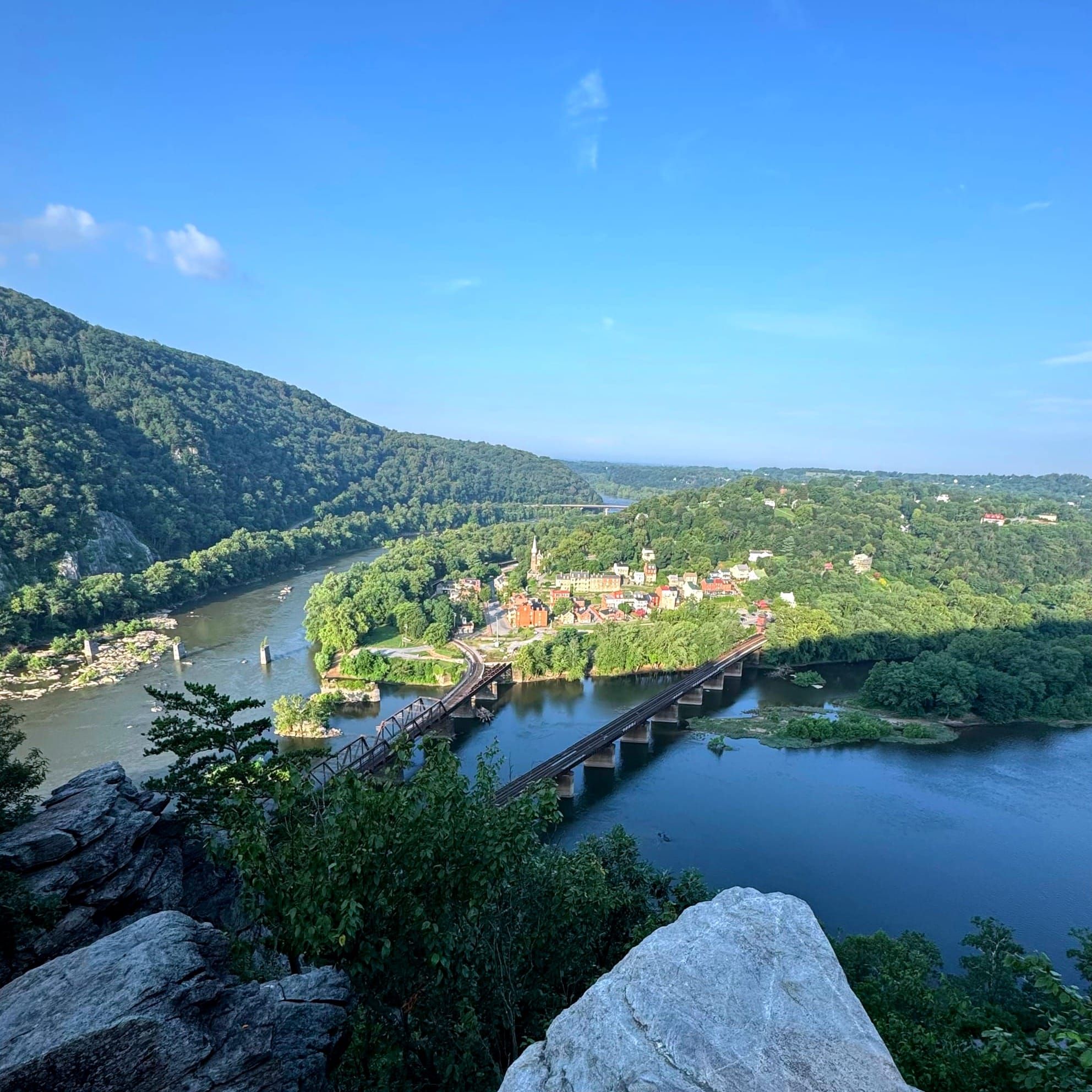
Enjoy a peaceful morning scene, brought to you by the Department of the Interior.