
Next Interior Memos weekly digest, 2025-11-06
The shutdown continues, there was an election, the RIF news evolved, and other news of interest to today and Interior’s future.

This week marked both a day of elections that saw many millions of people step up to take action—by voting and having their say about the direction of government. Hooray! We’ve also passed the previous record duration for a federal government shutdown given the lapse of funding, which is harming people. Boo.
This week’s digest covers RIF news summarized again by Tony Irish, then a focus on one issue each for the resource, science and knowledge, and Tribal issues parts of Interior’s mission, plus a few relevant tidbits you may find interesting.
Responding to your feedback about the weekly digest, we’ve added a table of contents to the newsletter, and are being explicit about the link of news items to Interior’s future. One we haven’t gotten to but will work on is how to solicit and share information on additional engagements for folks, especially outside the DC area. Other suggestions for the digest, which is one type of post we do on Next Interior Memos? Feel free to add them here. Interested in other ways to engage? A few options:
- New: Learn more about Interior’s Contributions and its use and application in a webinar, 18 November at 4:00-4:30pm Eastern Time. Register here.
- Sign up to help beta test our community site (more info).
- Share input on the transition to the Next Interior Co-op (more info).
- Add your name to a collection of people who can speak on the details of Interior’s work and operations (more info).
- Know of lawyers / firms who can help advise on the Co-op? Get in touch.
RIF update (Tony)
Last week in the Shutdown RIF litigation, the court imposed on Interior (and other agencies) a Tuesday (11/4) deadline to file “an accounting of any RIFs that have been issued on or after October 1, or that were in preparation at the time of this Court’s [various court orders that spanned October 15 through October 28].” Rather than file such an accounting, on Tuesday Interior instead filed a declaration by the Chief Human Capital Officer that implicitly (though not directly) attempted to justify the lack of an accounting. A key element of the declaration is the statement that “Independent of the October 28, 2025 PI Order, Interior has no plans to, and therefore will not be, issuing RIF notices to any employees during this lapse in appropriations.” This is undoubtedly good news: Interior will not issue any RIFs while the shutdown continues. Nonetheless, the failure to provide the requested accounting is disappointing, both due to the lack of additional advance information regarding RIFs available to the Interior community, and in my view the inconsistencies in Interior’s actions before the court.
The declaration does not expressly state why no accounting was provided. While it attests that no RIFs are imminent as a seeming explanation, this specific court order makes no mention of imminence. Instead, the scope of the order relies on whether RIFs were in preparation within the specified timeline. On October 17 an Interior declaration stated, “Interior had intended on imminently abolishing positions,” and subsequent declarations on October 17 and 20 also discussed imminent RIFs, sufficiently planned that Interior was able to identify 89 covered areas and 2,050 positions to be abolished. The current declaration itself acknowledges these as “certain RIF plans that were in preparation at the agency” (emphasis added). Yet neither Interior nor DOJ make any argument as to why Interior need not provide any other RIF plans that were in preparation at that time, in accordance with the court’s order.
Elsewhere, the new declaration asserts that “any final decision to take action and issue RIF notices has not yet occurred and, in fact, is presently on hold, given the lapse in appropriations” (emphasis added). Yet, on October 17 the same declarant noted “Because of the duration of the lapse in appropriations, it has become clear that RIF notices, if finalized on a timeline consistent with the preexisting planning process, might be issued during the lapse in appropriations[.]” There is no explanation as to how RIFs might be issued during the lapse in mid-to-late October, yet now the lapse is the basis for an implicitly enduring hold on action.
We can’t currently tell whether plaintiffs (or the court on its own accord) consider these unexplained shifts and seeming inconsistencies to be meaningful and worth pursuing. Given the assertion that no RIFs will occur during the shutdown, the parties may be satisfied that the most pertinent terms of the preliminary injunction will be complied with. Then again, given the changing nature of Interior declarations to date, the parties may be concerned that this latest assertion is not entirely reliable, and may pursue the matter further. Whatever the case, we will keep an eye out and provide updates as needed in the coming Memos.
Resources: The Public Lands Rule
Next week, on 10 November, remains (so far as I know) the deadline to comment on the administration’s proposal to rescind the Bureau of Land Management’s regulation from last year, the Public Lands Rule (PLR). You may recall that the regulation clarified that conservation and restoration are among the multiple uses that the lands must be managed for, drawing directly from statutory language, and gave land managers with BLM some tools to put that into practice. And you may recall that the current administration is trying to get us to believe that the word “use” doesn’t mean what it clearly does—gaslighting us. (The new nominee to head BLM is only going to try to make things worse…) The immediate action is to have people—many, many thousands of people who love our public lands—weigh in to point out that we won’t be gaslighted and that rescission is a bad idea (see the call-to-action below).
This pressing issue raises questions about what a rescission would mean for the future of Interior’s management of the public lands system. We don’t want to get too far out over the skis since we haven’t yet had the discussions or done the analyses that would make for a fully developed position, but there are a few possibilities to consider. For example, I think about whether Congress will need to embed the rule, or something similar, in law to reinforce the message that using our public lands for conserving our natural heritage is part of BLM’s mandate. Or if more is needed for statutory direction to the Bureau to advance issues like general range health standards and the data and evidence systems that inform management decisions. These are all big topics to be covered in depth in coming months and years.
Not sure what to say? You can point out that conservation is certainly a use and that BLM managers should have these tools at their disposal. Or join other comment letters that dive into details, such as this one from the America the Beautiful for All Coalition, this one organized by the Outdoor Alliance, or others you can find from your network that reflect your values. Follow Act Now for Public Lands to stay up-to-date.
Science and knowledge: Nature data
NatureServe, which is a data and science nonprofit, works with Interior and other federal agencies, states, and the non-governmental sectors in the US and beyond, has a new tool called InSite to give “insight into the biodiversity opportunities and risks of any location in the contiguous United States.” Based on an example report that you can get by signing up for more information, this looks like a really great approach to making biodiversity data useful!
I thought it worth noting this release because in my vision for a strong future Interior, there’s a federal statistical unit for biodiversity data within the agency* that interfaces closely with NatureServe (and others) to span sectors and boundaries to bring a wealth of nature data to bear on decision-making that advances conservation. There’s lots of talk of speeding up permitting—which is fine, but we cannot let the desire for speed come at the expense of people, nature, or basic democratic processes—and this kind of tool is what can help enable that.
* I’m not married to such an agency being principally in Interior; there are good ideas bubbling along out there for something like a “Census” for nature data that could be in a different federal agency. But Interior would be part of that system and would need a dedicated component to do the work, say, in the Ecosystems Mission Area (which is targeted by this administration).
Tribes: Chaco Canyon
Even with the ongoing shutdown, there is news on Tribal lands. As the AP covered, Secretary Burgum is “considering” revoking the Biden-era protections for Chaco Canyon, a UNESCO World Heritage Site, against new oil and gas development, and initiating Tribal consultations. (The consultation is not posted as I write this, but Dear Tribal Leader letters have apparently gone out…) Since the Secretary just got back from a Middle East trip and meetings with oil and gas royalty, I don’t think anyone will be surprised if the “decision” is actually a foregone conclusion. (To be clear, this is not a cut-and-dry issue: the protections are deeply valued by numerous pueblos, but oil and gas royalties from the area are important to some in the Navajo Nation.)
Other tidbits
- A bipartisan bill directing federal agencies to account for staffing losses driven by AI. This is critical now and going forward, though I hope we work in accountability for those who cause the losses when
- “Threats against public servants increased over 35 times what they were a decade ago, according to new research” Unacceptable.
- It’s amusing to see certain factions go after a newly elected mayor for being “Communist” (he’s not) while actively pursuing what sure looks like classic Soviet centralization by requiring leadership (=appointees) approval of all hires rather than distributing authority for more localized control to meet people’s needs.
- The Department has an Orphaned Wells Program, funded by the Bipartisan Infrastructure Law, which was created to help address big problems like this in Oklahoma.
Parting shot
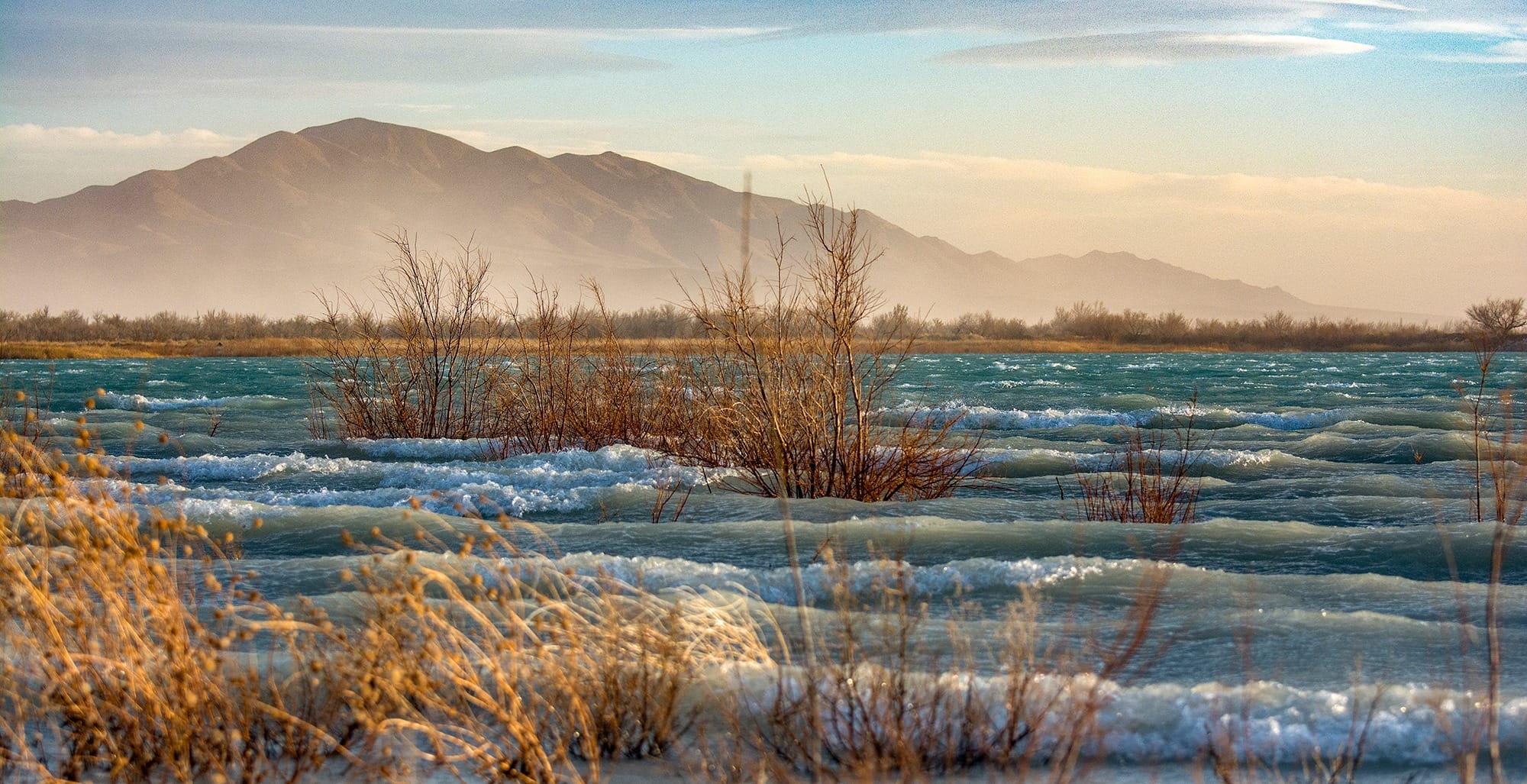
I was looking for an Interior photo for a project among the Department’s Flickr sites (like this one) and came across this one that I really love from the National Park Service:
