Interior's Public Lands Rule: Gaslighting us to take away tools for conservation
The Trump administration’s proposal to rescind the Public Lands Rule will harm our public lands, hamper conservation, and leave people less well-off. And they're doing it by gaslighting people into believing the word “use” means something different than it really does.

Ed. Note–When looking back at this post in early November, I realized there were a few non-substantive changes that would help the reader, like adding headers and correcting a typo. As a result, this version is not identical byte-by-byte with the emailed version, but all meaning remains the same.
A scenario
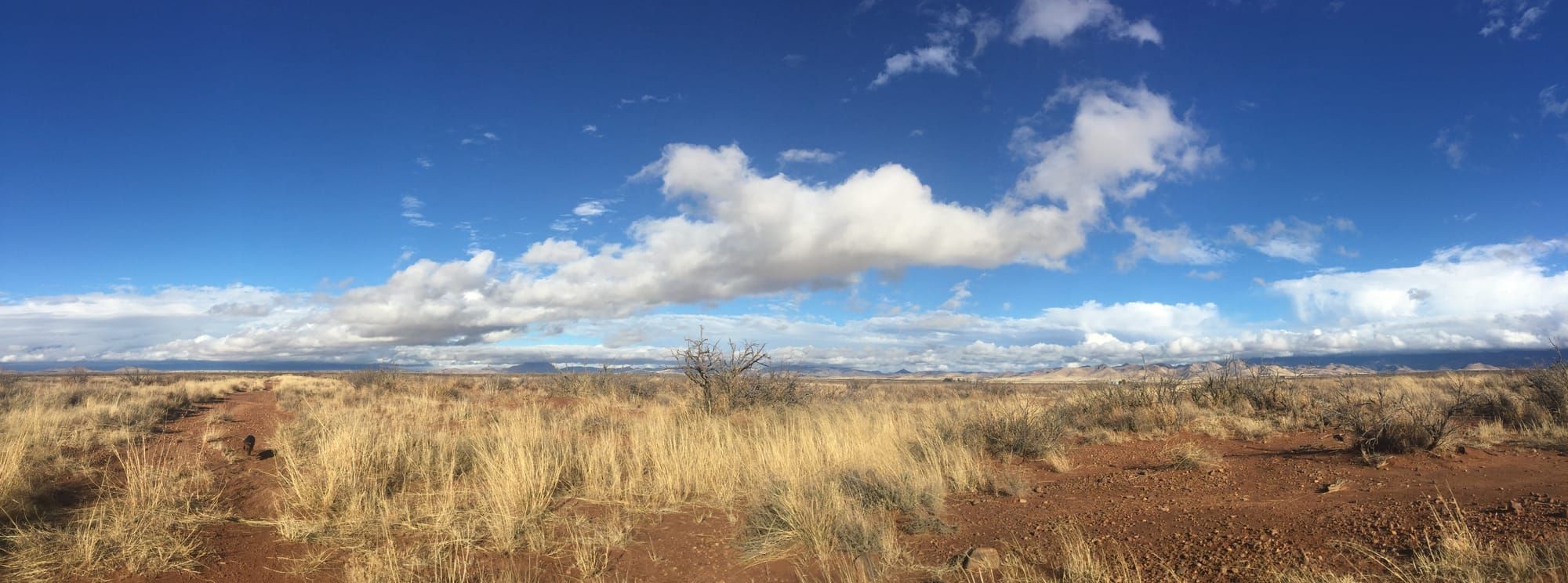
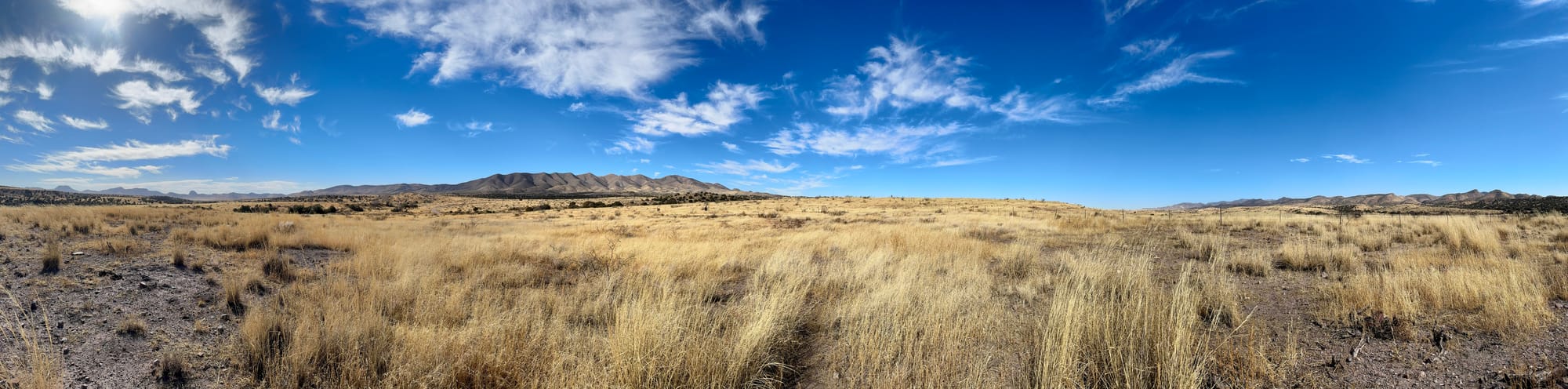
Congratulations! You’re now in charge of a Bureau of Land Management (BLM, part of the Department of the Interior) district office in your favorite Western state! It might be some of BLM’s desert grassland in New Mexico, or sagebrush or forests or other habitats across the West. Regardless of the details, it’s a very cool but complex job. Among other things, you have to figure out the many ways the lands and waters of your district will be used. That has to be done according to law, especially the Federal Lands Planning and Management Act (FLPMA), and with public input that the law requires and people expect.
To do your job, you think about what FLPMA says about “use.” First and foremost, you have the relevant text from the Congressional declaration of policy of FLPMA. These policy statements right at the top of a law are Congress’s statement of values for the country. They state why Congress is passing a law, as representatives of the people of the United States. For FLPMA the policy statement is at 43 U.S.C. 1701, including these key statements:
The Congress declares that it is the policy of the United States that—
[...]
(7) goals and objectives be established by law as guidelines for public land use planning, and that management be on the basis of multiple use and sustained yield unless otherwise specified by law;
(8) the public lands be managed in a manner that will protect the quality of scientific, scenic, historical, ecological, environmental, air and atmospheric, water resource, and archeological values; that, where appropriate, will preserve and protect certain public lands in their natural condition; that will provide food and habitat for fish and wildlife and domestic animals; and that will provide for outdoor recreation and human occupancy and use;
Right from the beginning, Congress is clear that BLM’s lands have to be managed for multiple uses, with a diverse set of goals that include protective and conservation priorities. While there is a lot of regulation, policy, guidance, and history around extractive uses on BLM’s estate, there’s not much on the books for those conservation uses that Congress included.
Lucky for you, nature, and all of us, in 2024, BLM issued a rule that clarified “conservation is a use on par with other uses of the public lands under FLPMA's multiple-use and sustained-yield mandate” and provided tools to facilitate that conservation use. Even though this is right there in the law, it had not been articulated in regulations, which left practitioners like you without needed tools to fully meet FLPMA’s mandate, like conservation! But now, you’ve got better direction and tools like conservation and mitigation leasing to use alongside with grazing and energy leases to make sure that, across the landscape, the law’s purposes are met. Hooray!
Well, sorry to break it to you on your first day on the new job, but the Trump administration is planning to take away the Rule and the tools that go with it. Because they don't know what words mean and they hope you don't either.
But words mean things
Here’s the basic problem: the Trump administration wants people to suspend reason and believe that our regular understanding of the word “use” is wrong and that their interpretation is correct. Their entire argument is:
But the Conservation and Landscape Health Rule identifies conservation—a non-use—as a productive use for leases and permits. This is contrary to the BLM's mandate and statutory authority. Conservation is not a “use” under the statute.
They are gaslighting us, that is, to psychologically manipulate (a person) usually over an extended period of time so that the victim questions the validity of their own thoughts, perception of reality, or memories. Secretary Burgum and the administration are asking you to take what you’ve known for years and is plain-as-day...and just accept that conservation isn’t a use.
What does use mean? Let’s turn the mic over to Merriam-Webster:
Use (ˈyüz [verb] or ˈyüs [noun])
verb: to put into action or service : avail oneself of : employ
noun: the fact or state of being used
For such a small word, “use” sure has a lot of meaning: these two definitions from Merriam-Webster are from among two dozen the dictionary has listed! (Is there a record for the number of definitions per word length? Would “use” win?)
Even with those many definitions, most people have a pretty good understanding of what it means to “use” something. I use my mug to hold my coffee as a means of delivering caffeine to my too-tired brain as I write this. You use words to describe your feelings about the delicious coffee you’re drinking or that’s “just water dressed in brown.” Organizations use their resources and capacities and authorities to deliver things for people, whether it’s businesses delivering coffee beans or a web service or a Federal agency delivering Social Security checks or the many benefits of our public lands.
BLM’s mission, at the direction of FLPMA, falls into that last bucket: it uses various authorities and directions from Congress to manage our public lands—245 million acres worth!—for the benefit of the Nation. Some of that is using its authorities to provide resources in an extractive and (often) exclusive manner, like energy and minerals production, grazing and timber. But that’s clearly not all! Consider these examples:
- When BLM is using our public lands and waters to produce deer, quail, fish, or other game—or the species and ecosystems on which they depend for survival—then they are using our lands and waters to provide sustenance to people who hunt and fish, or just to ensure that ecosystems are intact and functioning.
- When BLM is using our public lands and waters to protect and recover threatened and endangered species from extinction, then it is using its authority and direction from Congress to meet a deep moral obligation, as embodied in our country’s Endangered Species Act: preventing extinction and conserving nature.
- When BLM is protecting public lands in watersheds from disturbance or destruction, then it is, in serving our country, using those lands to provide clean water, flood protection, and any other number of uses where people rely on or affected by water, directly or indirectly, across the West.
- When BLM is protecting areas that are of critical environmental concern, say because Congress said to “protect and prevent irreparable damage to important historic, cultural, or scenic values, fish and wildlife resources or other natural systems or processes, or to protect life and safety from natural hazards,” then it is using our lands for a productive purpose that Congress stipulated.
These points are just a few of the examples “use” in any ordinary sense of the word. Of course conservation and other protective uses are…well, use! Each of these are, of course, perfectly logical—except to the current administration.
Even in the law the meaning is clear
You might now wonder if the administration has an ace in the hole when they write, “conservation is not a use under the statute.” Maybe they’re saying that FLPMA lists out what constitutes uses, maybe even lists topics like conservation as non-use? That would be odd since we saw in the Congressional declaration of policy of FLPMA that Congress spelled out purposes like protecting and preserving nature and other values.
What is the definition of “use” under FLPMA? Well, use is not defined. You can look for yourself in 43 U.S.C. 1702, Definitions! The closest we have is the definition of “multiple use”:
(c) The term “multiple use” means the management of the public lands and their various resource values so that they are utilized in the combination that will best meet the present and future needs of the American people; making the most judicious use of the land for some or all of these resources or related services over areas large enough to provide sufficient latitude for periodic adjustments in use to conform to changing needs and conditions; the use of some land for less than all of the resources; a combination of balanced and diverse resource uses that takes into account the long-term needs of future generations for renewable and nonrenewable resources, including, but not limited to, recreation, range, timber, minerals, watershed, wildlife and fish, and natural scenic, scientific and historical values; and harmonious and coordinated management of the various resources without permanent impairment of the productivity of the land and the quality of the environment with consideration being given to the relative values of the resources and not necessarily to the combination of uses that will give the greatest economic return or the greatest unit output.
I don’t know about you, but no matter how many times I read this definition, I cannot get to what the Trump administration's conclusion that “conservation is not a use under the statute.” Can you?
In the definition, I see Congress saying there are lots of values to consider and we want to make the most of them together--points to balance. I see Congress saying it’s not just about today, but also future generations—certainly a principle of conservation. I see Congress saying these uses need to be considered over large enough areas to provide for adjustment—sounds like landscape conservation would be part of that. I see extractive and non-extractive, renewable and non-renewable considerations, fish and wildlife and watershed and scenic values all to be balanced…sounds like conservation must be a use of our public lands.
Maybe they are looking at the definition of “principal and major uses” later in 43 U.S.C. 1702?
(l) The term “principal or major uses” includes, and is limited to, domestic livestock grazing, fish and wildlife development and utilization, mineral exploration and production, rights-of-way, outdoor recreation, and timber production.
But even that specifies fish and wildlife development and utilization, which is clearly concordant with conservation. Further, the use of this term in the statute only applies to specific situations in which management plans completely exclude one of these listed “major uses,” rather than being a general definition of “uses” that would supersede “multiple use.” So that's not a good explanation.
To recap: we have seen with our own eyes what the law says, and anyone can see this. It says BLM must plan and manage for multiple uses, and conservation is clearly among the uses and purposes that Congress spelled out in FLPMA.
Yet the administration is arguing the opposite, that conservation is not a "use" therefore the Rule should be cut. It brings to mind 1984 and doublethink. Or maybe the Marx Brothers movie, Duck Soup from 1933, where Chico Marx is imitating Groucho and trying to get someone to believe he is Groucho:
Character 1: Your Excellency, I thought you left.
Chico Marx: Oh no. I no leave.
Character 1: But I saw you with my own eyes.
Chico: Well, who ya gonna believe me or your own eyes?
Who will you believe? The administration or your own eyes?
A charitable explanation is that they just haven’t read up on this and are simply looking to destroy anything from the previous administration, regardless of the details. A less charitable explanation might be that they want to continue the same-ol’, same-ol’ way of operating, making sure that extractive industries get what they want at any cost to the other purposes of public lands.
Revisiting your scenario
Let’s go back to your new job. You take your job seriously because you’ve been entrusted by the US Government, on behalf of the American people, to do it well and faithfully. Congress has said what to do—multiple uses, including conservation, among other requirements. But once the administration rescinds the Public Lands Rule, your job will be harder, you won't have some of the tools that are possible. All because they don't understand what "use" means, and because they hope you will go along with it.
While you don't really have this imaginary job, lots of dedicated public servants in BLM do; and they're about to lose a valuable tool to advance conservation and meet Congress's direction on multiple use. Fortunately, you can take action that can help them.
Take this opportunity to comment on the proposed rescission, which must be done by 10 November 2025.
Not sure what to say? You can point out that conservation is certainly a use and that BLM managers should have these tools at their disposal. Or join other comment letters that dive into details. We'll remind you a couple of times before the due date!
Want more detailed information?
As I was writing this Memo, I remembered seeing an academic paper about the Rule last year, but I hadn’t had time to read much of it. I took a quick read today and if you like diving into details—and fewer Marx Brothers references—then you’ll appreciate it and the citations therein: https://www.ssrn.com/abstract=4985600